Wedding Invitation Wording: Templates in English and Urdu
Most Pakistani wedding cards, printed or digital, follow the same order: the Bismillah (if the family wants it), who is hosting, the request to attend, the couple's names with their parents' names, the function, the date, time and venue, and finally how to reply. Below are ready-to-use templates for every function, in English and in natural Urdu, to copy and adapt with your own names and details.
The traditional order, explained
Once you know why Pakistani invitations are built the way they are, you can write your own version with confidence.
- Bismillah. بسم اللہ الرحمن الرحیم opens many family cards, especially for the Nikah. It is optional and personal; some families use it on the main card only.
- The host line. Who is inviting the guest. Traditionally this is the parents or the family, not the couple. Couple-hosted invitations are newer and increasingly common.
- The request. The sentence asking the guest to attend: "request the honour of your presence", or in Urdu, "آپ کی شرکت کے منتظر ہیں".
- The couple, with parentage. The groom's name, son of his father; the bride's name, daughter of her father. This is the line every Pakistani card keeps even when everything else is simplified, because it tells guests which two families are being joined. The groom's name comes first and the bride's second, even on a card from the bride's family.
- The function. Mehndi, Baraat & Nikah, or Walima, named clearly, because many guests attend only some of them.
- Date, time and venue. Include the day of the week.
- RSVP. A line asking guests to confirm. It was rare on printed cards and is now standard on digital ones, because the family needs the number.
Not every card needs all seven. A Mehndi card can go straight to the function, the date and the venue; a formal Nikah card from an older household usually keeps all seven, in order.
Ready-to-use wording templates
1. Islamic opening (Bismillah)
Use this as the first line of a formal card, before the host line.
English: In the name of Allah, the Most Gracious, the Most Merciful.Urdu: بسم اللہ الرحمن الرحیم
Some families follow it with Surah Ar-Rum, verse 21, on marriage and companionship. See Islamic wedding invitations for the verse in Arabic with its English and Urdu meaning.
2. Formal, hosted by the groom's family (Baraat & Nikah)
EnglishMr. & Mrs. Khurram Abbasirequest the honour of your presenceat the Baraat and Nikah of their sonZainwith Mahnoor, daughter of Mr. & Mrs. Faisal RehmanSaturday, 14th November · 7:00 pmThe Orchard Marquee, LahoreKindly confirm your attendance. Urduبسم اللہ الرحمن الرحیمخرم عباسی صاحب اور بیگم خرم عباسیاپنے صاحبزادے زین کی بارات اور نکاح کی تقریب میںجو مہ نور بنتِ فیصل رحمٰن کے ساتھ طے پایا ہےآپ کی شرکت کے منتظر ہیںہفتہ، 14 نومبر، شام 7 بجےدی آرچرڈ مارکی، لاہور
3. Formal, hosted by the bride's family (Baraat & Nikah)
EnglishMr. & Mrs. Aslam Chaudhryrequest the pleasure of your companyat the Nikah and Rukhsati of their daughterRameenwith Hamza, son of Mr. & Mrs. Tariq BaigFriday, 20th November · 7:30 pmThe Magnolia Hall, Karachi Urduاسلم چودھری صاحب اور بیگم اسلم چودھریاپنی صاحبزادی رامین کے نکاح اور رخصتی کی تقریب میںجو حمزہ ولدِ طارق بیگ کے ساتھ طے پایا ہےآپ کی شرکت کو باعثِ عزت سمجھیں گےجمعہ، 20 نومبر، شام ساڑھے 7 بجےدی میگنولیا ہال، کراچی
On a bride's-family card, the bride is named as "their daughter" in the host's sentence, but wherever the couple appear together as a pair, the groom's name still comes first.
4. Couple-hosted, modern
For couples issuing the invitation themselves, with both families named as giving their blessing.
EnglishWith the blessings of both our families,Owais Farooqi & Anaya Siddiquiinvite you to celebrate our wedding.Nikah: Friday, 6:00 pm · Walima: Saturday, 8:00 pmDetails and directions inside. Urduدونوں خاندانوں کی دعاؤں کے ساتھاویس فاروقی اور عنایہ صدیقیآپ کو اپنی شادی کی خوشیوں میں شریک ہونے کی دعوت دیتے ہیںنکاح: جمعہ، شام 6 بجے، ولیمہ: ہفتہ، رات 8 بجے
5. Mehndi
EnglishThe colours are out and the dhol is warming up.Join us for the Mehndi of Daniyal & Kiran.Thursday, 12th December · 6:00 pm onwardsBright colours welcome. Urduرنگ سج گئے ہیں، ڈھول تیار ہےدانیال اور کرن کی مہندی میں ضرور تشریف لائیںجمعرات، 12 دسمبر، شام 6 بجے سےشوخ رنگوں میں آئیے
6. Baraat & Nikah, short
EnglishPlease join us as Salman arrives with his Baraat for his Nikah with Noor.Baraat: 6:30 pm · Nikah: 7:30 pmThe Palm Court Hall, KarachiSeparate seating for ladies and gentlemen. Urduسلمان کی بارات اور نور کے ساتھ ان کے نکاح کی تقریب میں تشریف لائیںبارات: شام ساڑھے 6 بجے، نکاح: شام ساڑھے 7 بجےدی پام کورٹ ہال، کراچیخواتین و حضرات کے لیے نشست کا الگ انتظام ہوگا۔
7. Walima
The Walima is hosted by the groom's family.
EnglishThe family of Bilal requests the pleasure of your companyat the Walima of Bilal & Sana.Monday, 5th January · 8:00 pmThe Rose Garden Hall, LahoreDinner will be served. Urduبلال کے اہلِ خانہبلال اور ثنا کے ولیمے کی تقریب میںآپ کی شرکت کے منتظر ہیںپیر، 5 جنوری، رات 8 بجےروز گارڈن ہال، لاہور
8. RSVP line
English (formal): Kindly confirm your attendance by 1st November.English (casual): Let us know if you're coming. Just tap the button below.Urdu: براہِ کرم یکم نومبر تک اپنی شرکت کی تصدیق فرما دیں۔
On a digital card, where the guest taps rather than writes, keep the reply buttons ungendered: "جی، ہم آ رہے ہیں" and "معذرت، نہیں آ سکیں گے" rather than a gendered "میں آؤں گا".
9. Dress code
English: Dress code: pastels, please.Urdu: لباس: ہلکے رنگ
10. "Your duas are our gift"
English: Your presence and your duas mean more to us than any gift.Urdu: آپ کی شرکت اور دعائیں ہی ہمارے لیے سب سے بڑا تحفہ ہیں۔
11. Nikah registration note
English: The Nikah will be registered.Urdu: نکاح باقاعدہ رجسٹر کیا جائے گا۔
Getting the names and parentage right
Two habits keep formal wording correct. Write the groom's name before the bride's wherever the couple appear together. And check every parent's name and spelling with both families before it is finalised: it is the line most likely to be read twice. If a parent has passed away, most Pakistani cards write "(late)" after the name in English, and مرحوم or مرحومہ in Urdu, rather than leaving them out.
Adapting these for a digital invitation
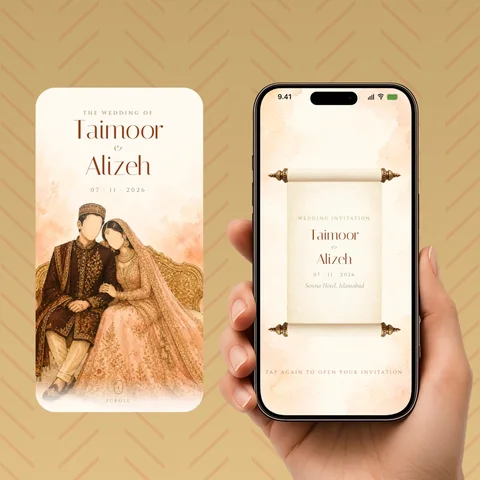
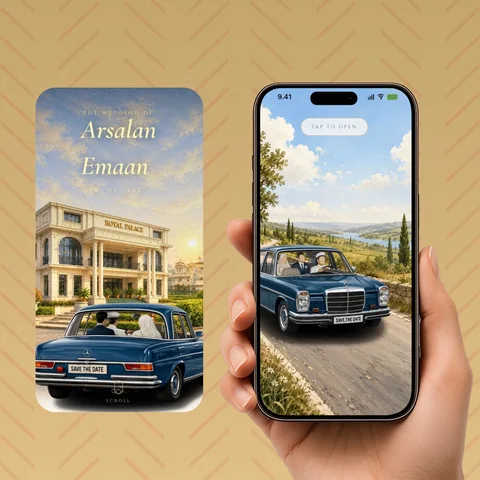
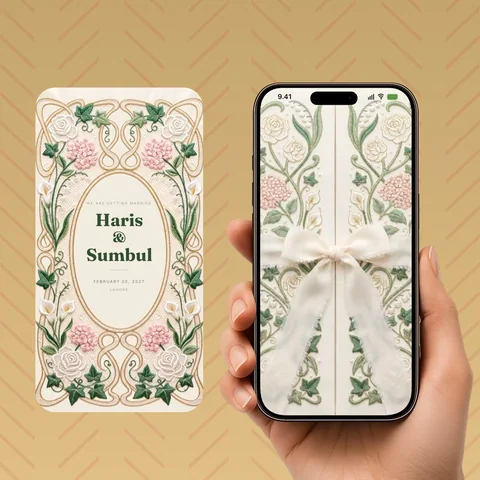
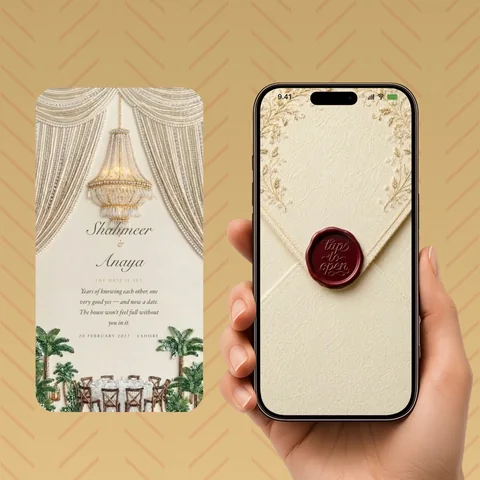
A printed card has to fit everything onto one folded sheet, so families compress. A digital invitation doesn't have that limit. On a Niru card the Bismillah, the host line and the couple's names sit on the opening screen, and each function (Mehndi, Baraat, Nikah, Walima) gets its own date, time, venue and map, in English and Urdu, switched with one tap. You write the same wording; there is simply room to say it properly.
Browse Niru's designs to see this wording inside a real invitation, or read how the functions themselves are ordered in our guide to Pakistani wedding functions.